

Using HACCP Certification to Gain New Clients
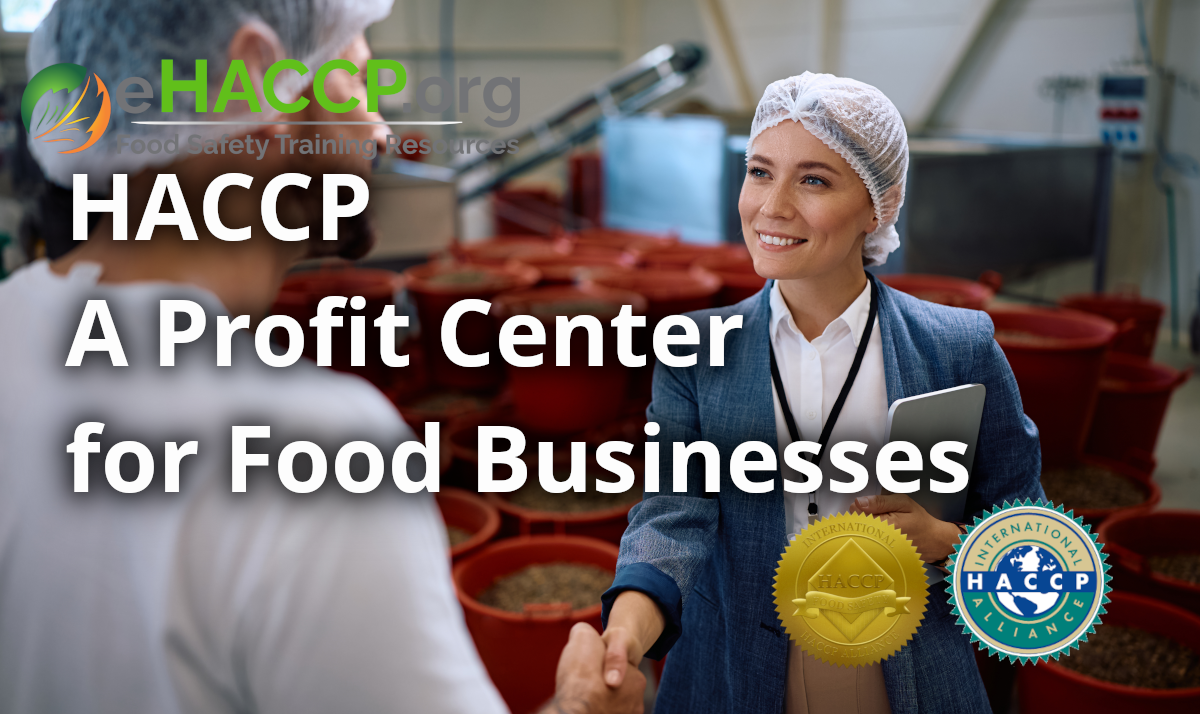
A HACCP certification can be a profit center rather than an operating expense for food businesses looking to gain new clients.
I took the Juice HACCP course which allowed me to advance my knowledge in the principles of GMP, GAP, 7 HACCP principles and more. Thank you eHACCP.org”
LUNENBURG, NOVA SCOTIA, CANADA, January 14, 2026 /EINPresswire.com/ -- Getting HACCP certified can be a powerful catalyst for growth for a small food manufacturing operation. — Vania White
Companies that have been in business for years, that operate, from a food safety perspective, a flawless record of delivering great quality, super delirious, and safe food. They know how to do it. They’ve been doing it forever and yet they seem to have a hard time opening new markets, landing big clients, and they lose to inferior manufacturers. Often it is something that is overlooked and taken for granted, the food safety posture that is happening behind the scenes isn’t properly documented, validated, and certified. That’s where HACCP come in.
A food business, that has been around for a long time, or even a newer one that demonstrates good business practices probably demonstrate the ways in which “things are done”. There may be a folder of SOPs that are referred to, recipes that are followed to the T, and protocols that are followed however when a request for a validated food safety plan is made, that box is left unchecked. Why go through all the trouble, time and money to build and prove something that, for the most part, already exists? Why build a HACCP System? There are several good reasons.
Getting HACCP trained and certified has many benefits but the main one are that large retailers, foodservice chains, food distributors, export markets, and government contracts require a supplier to have a certified food safety system in place. It could be HACCP or any food safety system recognized by the Global Food Safety Initiative schemes like SQF, BRC, etc. A bakery can not sell bread to Costco without submitting proof of a verifiable food safety plan in place. With a HACCP system a business can get more and bigger customers.
Having a HACCP certification demonstrates that a business follows a science-based food safety methodology. It signals professionalism and reliability, reduces perceived risk for buyers, and differentiates the business from non-certified competitors. Having a HACCP certification makes for easier sales conversations and stronger long-term contracts.
Aside from making more revenue, having a HACCP plan reduces costly food safety incidents. A HACCP system focuses on preventing problems before they happen. A business will experience fewer recalls and product withdrawals, less waste from rejected or reworked products, and lower risk of brand damage or lawsuits. A HACCP plan protects revenue and stabilizes growth.
A penny saved is a penny earned. HACCP improves operational efficiency. HACCP requires clear procedures, monitoring, and documentation, better process control, clear roles and responsibilities, and faster problem identification and correction. This results in smoother production and better margins.
A HACCP certification enhances brand reputation and is used in marketing and sales. It proves commitment to food safety, strengthens, brand credibility, increased customer confidence. It also strengthens regulatory compliance and aligns closely with food safety regulations in many countries. A business can use the same stand of food safety in New York and apply it to most other parts of the world. HACCP is an international standard. It makes it easier inspections and audits, fewer compliance issues or shutdowns, better relationships with regulators, and offers less disruption to operations and growth plans.
A certified HACCP facility provides proof of commitment to food safety delivering a stronger brand credibility, and increased customer confidence. HACCP results is a competitive advantage in crowded markets.
HACCP is a tool for operational improvements and efficiencies. It enables business scaling. As production volumes grow, informal systems break down. HACCP provides structure that scales with the business; new staff can be trained faster, and consistency is maintained across shifts or facilities. The result is growth without losing control or quality.
HACCP keep clients. It improves supplier & partner relationships as HACCP certified businesses are seen as lower-risk partners. They are easier to work with co-packers and distributors, they better alignment with certified suppliers, and offer more confidence from investors or insurers thus building and maintaining stronger, more strategic partnerships.
HACCP certification turns food safety into a growth strategy, unlocking markets, reducing risk, improving efficiency, and building trust.
Stephen Sockett
eHACCP.org
+1 9023437763
email us here
Visit us on social media:
LinkedIn
Facebook
YouTube
X
Other
Legal Disclaimer:
EIN Presswire provides this news content "as is" without warranty of any kind. We do not accept any responsibility or liability for the accuracy, content, images, videos, licenses, completeness, legality, or reliability of the information contained in this article. If you have any complaints or copyright issues related to this article, kindly contact the author above.
