

My Journey Home
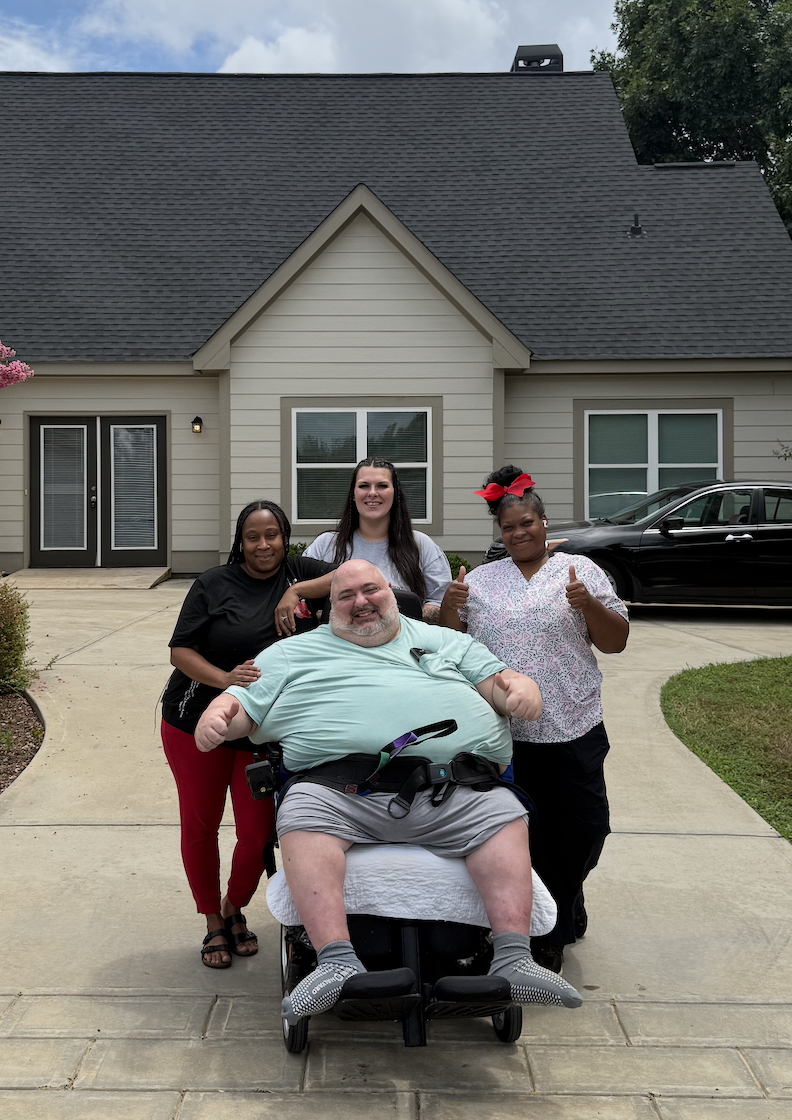 For ten years, I lived in a nursing home.
When people hear that, they often assume it was because I was old or because I needed medical care that could only be provided in an institution. That wasn't the case. I lived there because I didn't have access to the community supports I needed to live in my own home.
Like thousands of people with disabilities across Georgia, I wasn't waiting for a miracle. I was waiting for the right support.
Today, I'm writing this from my own home.
It's still hard to believe.
A Place That is Truly Mine
When visitors walk through my front door, I proudly give them a tour. I show them my kitchen, my living room, my bedroom, and the furniture I carefully picked out myself. I tell them about the parties I want to host, the cookouts I'm planning, and the family members I'm excited to invite over.
My brother, my nephews, and their families will finally be able to visit me in a place where I feel proud. For years, they only knew me in hospital gowns inside an institution. Now they'll know me as a homeowner.
For the first time in my life, I have a place that is truly mine.
One of the greatest gifts my home has given me is something many people never think about: privacy.
For ten years, I never had a room where I could simply close the door, think, relax, or enjoy silence. There was always noise. There was always someone nearby.
There was never a space where I could simply breathe.
Now I have that space.
I can sit in my living room with music playing through my couch speakers. I can light a candle or use aromatherapy, listen to music, watch movies, or simply enjoy the quiet. I'm looking forward to filling my home with plants, artwork, and colorful lighting that reflects my personality. I still have rooms to decorate, games to buy, and walls waiting to become my own.
This house isn't just where I live.
It's becoming home.
The Freedom to Choose
Freedom isn't just about where you live.
It's about having control over your own life.
For years, almost every decision required permission. If I wanted to leave the nursing home, I had to ask. If I wanted to go somewhere, I had to follow someone else's schedule. If there was an outbreak at the facility or transportation wasn't available, my plans were canceled.
Today, I decide if I want to spend the afternoon at the Botanical Garden, go shopping, cook dinner, or simply relax at home. I can meet my neighbors, attend church, explore Athens, and enjoy community events. I even dream about taking cooking classes, making homemade Greek recipes, and perfecting my own tzatziki sauce. I bought a food processor because I'm excited to learn.
These aren't bucket-list adventures.
They're everyday moments that I never had before.
I also look forward to celebrating milestones that once seemed impossible. Next year I'll turn 50, and instead of another birthday inside an institution, I'll celebrate with a house full of family, friends, laughter, and maybe the biggest cookout my neighborhood has ever seen.
That feeling is hard to describe.
It's called autonomy.
But none of this happened overnight.
The journey took ten years.
The house itself took years of planning, fundraising, advocacy, and coordination. More importantly, it took people who believed I deserved something better than institutional living.
The Power of Telling My Story
One of the biggest turning points came through Georgia's Storytelling Project.
When I agreed to share my story, I wasn't thinking about changing my own life. I simply wanted people to understand what life inside a nursing home was really like.
That storytelling eventually became the documentary 6,000 Waiting.
I never imagined how many people would watch that film.
After it was released, strangers began reaching out. People stopped me and said, "I saw your story. How can I help?" Others donated anonymously. Advocates invited me to speak. Podcasts, interviews, and writing opportunities followed.
The Storytelling Project planted the seed, and 6,000 Waiting helped it grow. Together, those stories showed what happens when people are forced to wait—not because they lack potential, but because they lack access to community supports.
Stories have power.
Stories change minds.
And changed minds change systems.
The Supports That Make Independence Possible
Another reason I'm living in my own home today is because of Georgia's NOW/COMP Waiver.
Many people have never heard of the NOW/COMP Waiver, but for thousands of Georgians with intellectual and developmental disabilities, it represents the difference between institutional care and community living.
The waiver funds the services that allow people like me to live safely in our own homes instead of nursing homes or institutions.
Without my NOW/COMP Waiver, my doctor made it clear that living independently in the community would not have been possible.
The waiver made my home possible.
But another group of people makes my life possible every single day.
My Direct Support Professionals (DSPs).
My DSPs are much more than caregivers.
They're teammates.
They're encouragers.
They're problem-solvers.
They're the people who help me with personal care, transportation, and daily routines. More importantly, they help me live the life I choose. Together we're figuring out what this new chapter looks like. They're helping me establish routines, explore my community, and slowly adjust after ten years of institutional living.
Sometimes I want to do everything at once.
I want to stay up late, explore every store, visit every park, and try every new experience. My DSPs gently remind me that I don't have to fit ten years of living into ten days. They're helping me build a life—not just escape an institution.
Because of them, I can go to church. I can shop for groceries. I can see movies, visit the botanical gardens, and hopefully spend afternoons at festivals and county fairs. I can build friendships, entertain guests, and maybe even find someone special to share my life with someday.
Those were dreams I never allowed myself to have while living in a nursing home.
Now they're possibilities.
People sometimes think independence means doing everything alone.
It doesn't.
Independence means having the freedom to direct your own life while receiving the supports you need to make that life possible.
My DSPs don't take away my independence.
They make it possible.
They deserve recognition, respect, and competitive wages because the work they do changes lives every day. Without a strong DSP workforce, community living simply isn't possible.
When policymakers invest in the NOW/COMP Waiver and the DSP workforce, they aren't just funding services.
They're investing in people.
Today, I can contribute to my local economy. I can shop at neighborhood businesses, eat in local restaurants, bank, volunteer, vote, and someday return to work. I want to pay taxes. I want to be known as a neighbor instead of a resident of an institution. I even employ people through my support team, something I never imagined would be part of my life.
I'm no longer separated from my community.
I'm part of it.
My Journey is Not Finished
Yet I know my story is not everyone's story.
Across Georgia, thousands of people remain on waiting lists for NOW/COMP Waivers. Many families continue providing around-the-clock care with little support. Others remain in nursing homes and institutions—not because they want to be there, but because community services aren't available.
No one should have to wait years for the chance to live in their own home.
If my journey has taught me anything, it's that hope is powerful, but hope alone isn't enough.
It takes advocacy.
It takes investment.
It takes policymakers willing to fund NOW/COMP Waivers and strengthen the DSP workforce.
It takes communities willing to believe that people with disabilities belong as neighbors, coworkers, volunteers, taxpayers, homeowners, and friends.
Today, I still think about the people I left behind in the nursing home.
Many of them are still waiting.
That's why my journey isn't finished.
Leaving the institution wasn't the end of my story—it was the beginning of a new mission.
My goal now is to help others find the same freedom I found. I want to continue telling my story, advocating for community living, and making sure the next person doesn't have to wait ten years for a place to call home.
Because after waiting so long, I've learned something simple but profound.
Home isn't just a house.
It's freedom.
It's possibility.
It's finally being able to dream about tomorrow instead of just getting through today.
Nick lives in Athens, GA and moved into his home in July 2026. Originally from New York, Nick is looking forward to decorating his place, grilling and having friends over, and cheering on the Dawgs.
Legal Disclaimer:
EIN Presswire provides this news content "as is" without warranty of any kind. We do not accept any responsibility or liability for the accuracy, content, images, videos, licenses, completeness, legality, or reliability of the information contained in this article. If you have any complaints or copyright issues related to this article, kindly contact the author above.
